


-
 قسم التصميم الإبداعي
-
قسم التصميم الهندسي الرقمي للمجوهرات
-
قسم النمذجة الأولية والتصنيع ثلاثي الأبعاد
-
قسم تصنيع وصياغة المجوهرات
-
قسم تجارة واستثمار المجوهرات والمعادن الثمينة
-
قسم إدارة أعمال المجوهرات
-
قسم الأحجار الكريمة والألماس
-
قسم العرض والتغليف
-
قسم التسويق والعلامة التجارية
-
قسم الجودة والتقييم
-
قسم التصوير والإخراج البصري للمجوهرات
-
الصياغة والصب
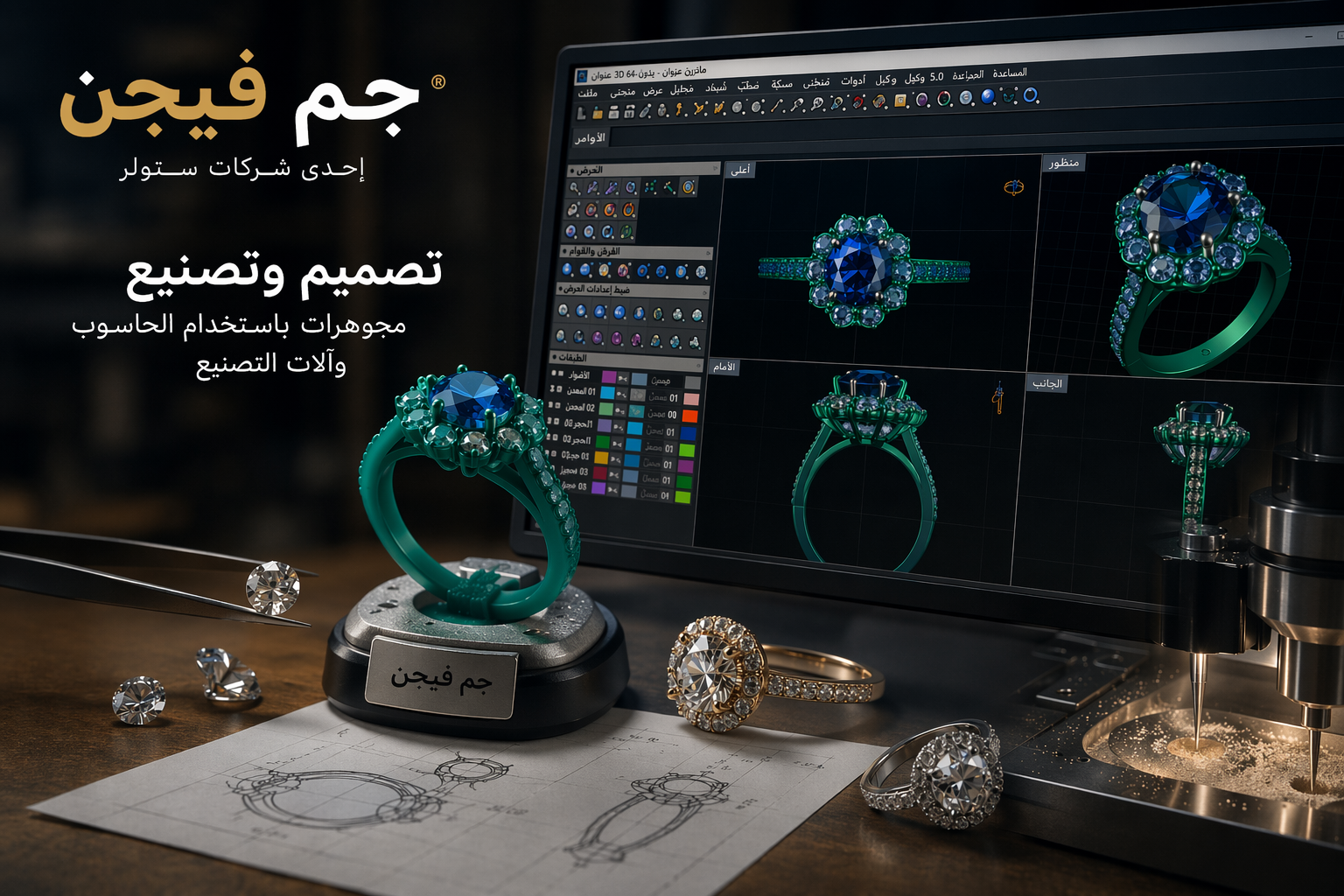
Integration of CAD/CAM Systems in Modern Jewelry Design: Gemvision
How Gemvision combines CAD/CAM, simulation, and AI-driven innovation to redefine modern jewelry design and manufacturing.
Gemvision: Technological Leadership in the Digital Transformation of Jewelry Manufacturing
Gemvision: Technological Leadership in the Digital Transformation of Jewelry Manufacturing
Introduction: Digital Transformation in Creative Industries
In recent decades, precision industries have undergone a profound transformation, and the jewelry sector has not been exempt from this evolution. Gemvision, a subsidiary of Stuller, Inc., has emerged as a key player in this shift, successfully bridging the gap between complex engineering technologies and the refined artistic sensibilities of designers. It has effectively transformed traditional workshops into highly efficient digital laboratories.
Technological Foundations of Gemvision
The company’s technological philosophy is built upon three core pillars that integrate computer science with materials science:
• Interactive Algorithm Development:
Gemvision has developed software solutions (such as Matrix and CounterSketch) powered by robust geometric engines. These tools enable users to manipulate complex mathematical models of solid objects without requiring a programming background, a concept known as User-Centric Design.
• Physical and Optical Simulation:
The company has invested in advanced rendering technologies to simulate light refraction within gemstones and its reflection on precious metals. This provides digital models that closely resemble real-world outcomes, with accuracy exceeding 95%.
• CAD/CAM Integration:
Gemvision goes beyond design by developing protocols that ensure compatibility between digital files and computer-aided manufacturing tools, such as CNC machines and resin-based 3D printers. This integration guarantees dimensional precision at the micron level.
Key Innovations and Products
1. MatrixGold:
Represents the company’s technological pinnacle, combining the power of Rhino software with specialized jewelry design tools. It features Parametric History, allowing designers to revisit and modify any previous step without starting over.
2. CounterSketch:
An innovative software solution based on mass customization, enabling retailers to modify designs in real time in front of customers.
3. Augmented Reality (AR):
Gemvision has integrated AR technologies to help manufacturers virtually showcase their jewelry before committing to the use of precious metals and gemstones.
Economic and Environmental Impact
Gemvision’s technologies have significantly enhanced sustainability in the jewelry industry through:
• Waste Reduction: Minimizing the loss of precious metals associated with traditional manual carving processes.
• Supply Chain Optimization: Reducing the need to ship physical prototypes across continents by replacing them with secure digital files.
• Cost Accuracy: Enabling precise calculation of metal weight and gemstone quantities before production, thereby protecting profit margins and reducing financial risks.
Conclusion: Future Prospects
Gemvision continues to push the boundaries of innovation, with a growing focus on integrating artificial intelligence into generative design processes. This will allow software to propose engineering designs that achieve maximum structural strength with minimal metal usage, ultimately redefining the concept of “digital craftsmanship” in the 21st century.

م. شجن عبدالوهاب
More from م. شجن عبدالوهاب

سحر الصياغة: ...
9 Apr 2026
بين دقة الهندسة ...
9 Apr 2026
Comments
Subscribe to Our Newsletter


Contact US



Reply to Comment